

Motorists Want to Join the Government: Turek on Cheap Drones and Expensive Tanks
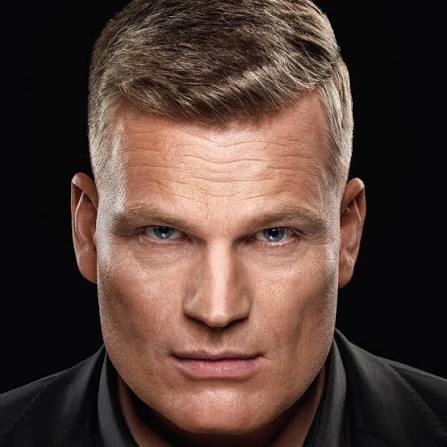
Member of the European Parliament and leader of Motorists for Themselves in the Central Bohemian Region, Filip Turek, outlined his election strategy as well as sharp criticism of the government. He spoke about return policies for refugees, accelerating construction, nationwide audits, and criticized military purchases.
Shortly before the elections, he appeared on the podcast Taste of Power. The host jokingly introduced him as the man who “moves all parts of the political scene” while at the same time dividing both the public and his competitors: MEP Filip Turek, honorary chairman of Motorists for Themselves and the lead candidate in Central Bohemia. In an interview that seamlessly moved between election tactics, transport, security, geopolitics, and domestic issues, Turek positioned himself against both the governing coalition and parts of the opposition, while just as firmly formulating what he would strive for in government. “Either people wave the Russian flag or the Ukrainian one. I believe I’m the one waving the Czech flag,” he summed up his stance on the labels that he says dominate the campaign.
Turek described his contact campaign as mostly friendly, claiming that aggression is concentrated on social media. “I practically don’t get negative reactions in the streets. Online, it’s disgusting,” he said, adding that after receiving threats, his team in some cases decided to hire professional security. The core of his criticism targets the Civic Democrats (ODS) and the Spolu coalition, which, according to him, rely on labeling opponents as “pro-Russian” instead of engaging in substantive debate. “They managed to spread it among people. Whoever disagrees with Ursula von der Leyen or Prime Minister Fiala is labeled pro-Russian,” he declared, adding that “ODS is unable to defend its results in the economy or in the EU.”
When the debate turned to the war in Ukraine and security, Turek laid out his plan for refugees. “A return policy after the war ends will be the main topic. If someone doesn’t work, their stay won’t be extended,” he said, while also acknowledging that some Ukrainians are helping to fill labor shortages, for example in social services. However, he called on the state to be prepared for possible security risks after the war, citing the Balkan experience in the 1990s. “To say organized crime doesn’t pose a threat is irresponsible coming from the Ministry of the Interior,” he argued, also criticizing what he sees as insufficient preparation of the police and schools for the influx of children.
The transport agenda, which has defined Motorists for Themselves, is another key pillar of Turek’s narrative. On construction, he spoke bluntly: “It’s unacceptable that NGOs block roads or dams. The focus of society must be people and their needs.” He criticized the Ministry of the Environment and promised nationwide audits across ministries, greater transparency, and legislative changes to shorten permitting procedures. Regarding highway toll stickers, he didn’t announce a populist price cut but rather a systemic reform. “I don’t want to promise the impossible. It makes sense to have the sticker tied to a person, not to each car,” the MEP said. As another symptom of inefficiency, he pointed to Prague’s construction projects. “The reconstruction of the Barrandov Bridge became significantly more expensive. That’s a tragedy of financial management,” he noted, criticizing the Pirate-led city administration.
A substantial part of the interview was devoted to defense and military procurement. Turek sharply questioned the logic of buying Leopard 2 tanks in an era of rapid drone development: “We’re buying the weapons of the past for the wars of the future. Cheap drones can take them out.” He also recalled Czech purchases of Russian helicopters and costly spare parts, going back to tenders from 2011. “ODS excluded American manufacturers and bought Russian Mi helicopters without competition. The Russians were given a blank check for overpriced parts,” he claimed. His solution? “Once in government, conduct nationwide audits in ministries and demand accountability wherever contracts were inflated.”
In foreign policy, Turek presented himself as a conservative diplomat and did not rule out that this would be the ministry he would seek. “The theory of international relations is my passion. My heart leans to foreign affairs, but my mind also to industry or defense,” he said, adding that he does not want to “sit in opposition.” Regarding the recognition of Palestinian statehood, he chose caution: “I feel sorry for all the victims in Gaza, but recognizing a state that cannot currently be defined is premature. Israel is our ally. I would wait for the direction of the United States.” In the broader geopolitical picture, he argued that the war in Ukraine may end with the partition of the country and a reconfiguration of great-power relations, with Europe bearing more of the financial burden. “We must speak honestly with the US. Promising five percent of GDP on defense and not delivering makes no sense. Let’s take it as an opportunity for smart investments,” he remarked.
He views domestic politics through the lens of program clashes rather than scandals. He mentioned “chat control,” which he attributed to STAN, and the stalled digitalization of building permits associated with the Pirates, mocking grand promises of hundreds of thousands of new apartments. He openly called for “intelligent, right-leaning” voters who have been disappointed by ODS. “We jokingly call ourselves ODS Revival,” he said, while rejecting that Motorists for Themselves aim at the SPD or ANO electorate. The debate also touched on the controversy over alleged undeclared coalitions: Turek welcomed the Constitutional Court’s decision to dismiss complaints. “We should beat political competitors in elections, not in court a week before voting,” he said, pointing out that the presence of smaller parties on the candidate lists of larger ones is common practice in Czech politics.
The conclusion of the interview brought Turek back to his ambition to govern and “get to work.” He does not see high salaries in the European Parliament as a reason to remain in Brussels. “I entered politics to change things, not to make money,” he said, admitting that participation in the next government would be a “suicidal mission” given the budgetary situation and EU obligations. Yet his prescription remains consistent across topics: fewer labels, more concrete decisions, audits, and pressure for state efficiency. “Let us get to it,” he added in the spirit of his campaign, counting on the fact that after the elections, he will no longer be speaking of his priorities only in a podcast.
Source: PrvniZpravy.cz


