

Understanding presidential power in Czechia and the lawsuit testing it

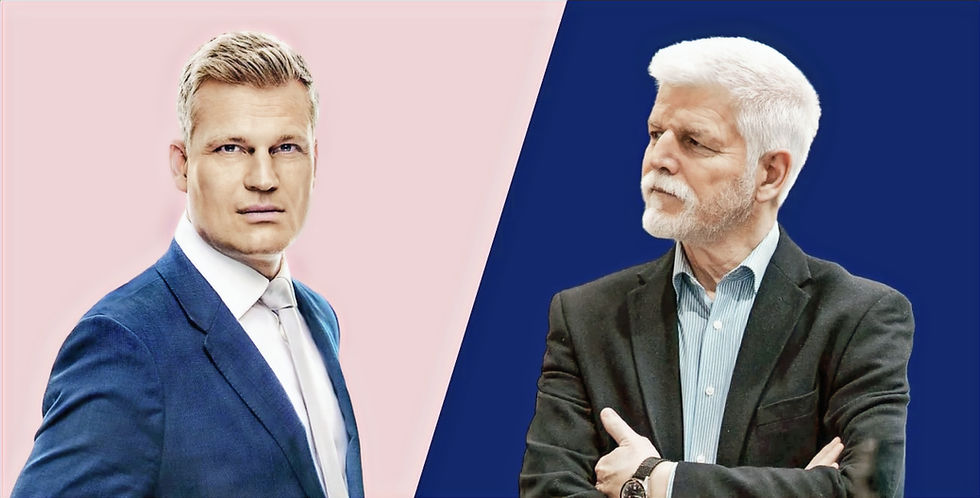
President Petr Pavel’s refusal to appoint a minister highlights unresolved questions about the limits of presidential authority in Czechia.
President Petr Pavel’s refusal to appoint the proposed environment minister has triggered an unusual dispute over the extent of the Czech head of state’s power and its limits.
The standoff has intensified in recent days following the nominee’s controversial comments made during a government trip to Ukraine.
How the dispute began
In mid-December, President Pavel appointed the new government led by Prime Minister Andrej Babiš. While most ministers were sworn in, Pavel declined to appoint Motorists party MP Filip Turek as minister of the environment.
Since then, the Ministry of the Environment has been temporarily overseen by Foreign Minister Petr Macinka, who also chairs the Motorists party, a junior member of the governing coalition.
Why the president refused
In a letter sent to the prime minister in early January, Pavel said Turek had repeatedly shown a lack of respect for the Czech legal system and for fundamental constitutional values.
He cited Turek’s past public statements, including remarks that downplayed Nazi Germany, questioned the dignity and equality of minorities, and downplayed violent acts of hatred. Pavel said that, taken together, these raised reasonable doubts about Turek’s loyalty to the constitutional order.
Pavel argued that refusing to appoint a minister can be used in exceptional cases as a preventive tool to protect democratic values.
Turek’s response
On Jan. 9, Turek said he would file a lawsuit against the president for protection of personality rights, seeking a public apology. He rejected the president’s reasoning, said he had never been charged or prosecuted, and described Pavel’s decision as based on impressions rather than facts.
The lawsuit would not directly determine whether Turek can become minister.
Why is this unusual?
While past Czech presidents, including Václav Klaus and Miloš Zeman, occasionally delayed ministerial appointments or raised objections, they generally accepted nominations proposed by the prime minister.
Refusing a minister on the basis of constitutional or value-based concerns, as Pavel has done, is widely described as unprecedented since the current constitution took effect in 1993.
The constitution states that the president appoints ministers on the prime minister’s recommendation, but does not explicitly say whether a nomination must always be accepted.
Ukraine remarks add fuel to the dispute
The controversy escalated on Jan. 10, after comments Turek made in Kyiv during an official visit accompanying Foreign Minister Macinka.
Turek said the war in Ukraine was caused by the foreign policy of major powers, NATO expansion, and ethnic reasons. He also stated that Russian attacks were not explicitly genocidal in nature.
The opposition party Mayors and Independents (STAN) stated that the remarks relativized Russia’s aggression and contradicted Czech foreign policy. STAN announced it would seek to remove Turek from his posts as vice chair of parliamentary committees on foreign affairs and European affairs, although it lacks the votes to do so.
Former prime minister Petr Fiala said the comments showed that Turek could not be a member of the cabinet.
What each side says
Pavel maintains that his constitutional role includes safeguarding democratic values and that court case law allows scrutiny of a nominee’s political loyalty.
The Motorists party and several government figures argue that the president’s role in appointing ministers is largely formal and that responsibility for cabinet composition lies with the prime minister and parliament. They warn that allowing presidents to reject nominees based on views or statements could weaken the parliamentary system.
What happens next
The dispute over Turek’s appointment is set to be discussed by the coalition council of ANO, SPD, and the Motorists on Monday. The issue comes as the government prepares for a confidence vote in the Chamber of Deputies next week, a formal parliamentary procedure in which the lower house approves or rejects the government as a whole.
The government is expected to win the vote comfortably, thanks to its 108-seat majority in the 200-member chamber. This means the Turek dispute is unlikely to threaten the government's survival, but it will continue to play out at the institutional level, highlighting unresolved questions about the limits of presidential authority in appointing ministers.
Overall, the situation illustrates a dual dynamic in Czech politics, with coalition disagreements over domestic and foreign policy leaving the government internally divided, yet maintaining its parliamentary majority.
Zdroj: Expats_cz


